


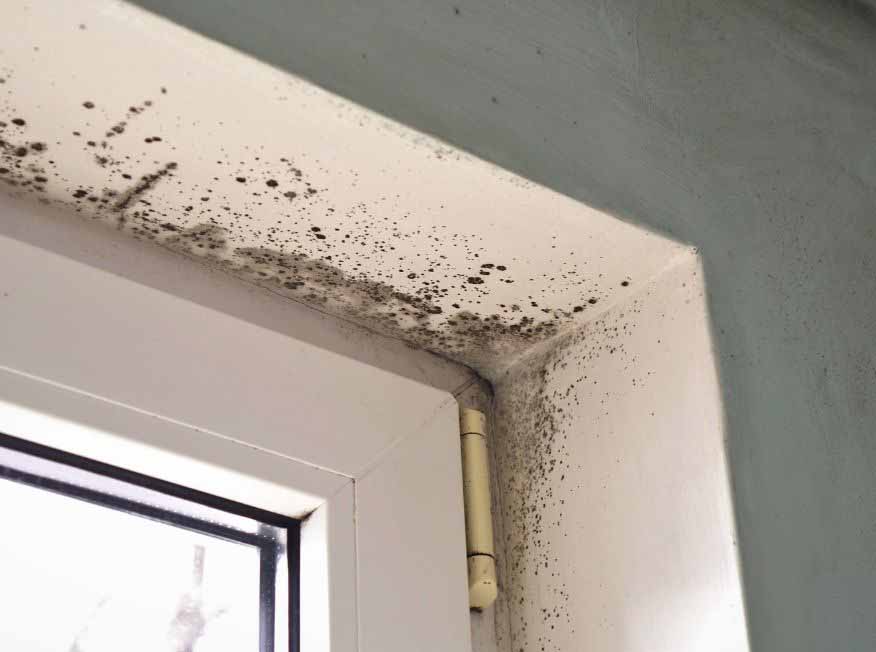

Paint will not kill mould. It hides it for a few months, then the spores work back through the film and the black speckling reappears in the same corner of the ceiling. We get called to fix that job every winter, usually in a bathroom or a south facing bedroom, and usually after someone has repainted it once already.
Mould is a fungus that lives on moisture, and it thrives in the cool, damp, poorly ventilated spots most Kiwi homes have at least one of. Killing it before you paint takes a few extra hours, and that is the difference between a repaint that lasts and one you redo next spring.
Not every dark patch is mould. Dust and cooking grease build up in similar places, particularly above heaters and around extractor fans.
The test we use is simple. Wet the surface and rub it. Dirt smears. Mould goes slimy under your finger, and the colour sits in the surface rather than lifting off. Black speckling in grout lines, along the top of skirtings or in a ring around a window reveal is almost always mould.
Check how far it has gone, too. Mould left for months penetrates the paint film itself, so surface cleaning will never be enough. If the coating has gone soft or chalky, it comes off.
This is the step that gets skipped, and the only one that decides whether the mould stays gone.
Condensation is the usual culprit in Auckland. Unflued gas heating, washing dried indoors, long showers with no extraction and closed bedroom windows in July all put litres of moisture into the air, and it settles on the coldest surface in the room. That is why ceilings and external wall corners go first.
Sometimes it is a leak instead. A failed shower liner, a cracked grout line, a blocked gutter overflowing behind a wall. Mould in a straight line, a running stain or a patch that is soft to push gets treated as water ingress until proven otherwise. In a bathroom that often means the waterproofing services in Auckland side of our work comes before any painting.
Bleach straight from the bottle is a common DIY move and a poor one. It lightens the stain and leaves the growth behind.
We use a proper moss and mould killer, diluted to suit the severity. Resene’s concentrate, for example, goes on at roughly 1:4 for mild growth, 1:3 for moderate, 1:2 for heavy and 1:1 where it is severe. Brush or spray it on, then leave it. It needs two to four hours on the surface before you rinse and scrub. Skip the dwell time and you have simply washed off a live colony.
A few things worth knowing before you start:
After rinsing, scrub the dead growth off rather than leaving it in place. Wash the whole wall or ceiling down with sugar soap to lift residue and oily film, then rinse with clean water.
Plasterboard holds moisture longer than it looks. We give a treated wall 24 hours minimum, longer in winter or in a room with no airflow, and we test rather than guess on anything that has been properly wet. Painting over a damp substrate traps the moisture behind the film, and blistering, peeling and fresh mould all follow.
Occasionally cleaning is the wrong answer. Plasterboard that is soft, swollen, crumbling at the paper face or stained through from the back will not come right with treatment. Nor will a ceiling that has had a roof leak sitting in it. In those rooms we cut out the affected sheets, fix and stop new board, then paint, and our plasterboard fixings in Auckland handle that.
One caution on older homes. Textured ceilings in houses built before the 1990s can contain asbestos. We do not sand or disturb anything that might, and where testing confirms it we work alongside certified asbestos removers.
Once the surface is clean, dry and sound, a stain blocking sealer goes over any area that was marked. It stops the old discolouration ghosting through your topcoats, a common complaint after a DIY mould repaint.
Then the paint system matters. Standard wall paint in a bathroom is a false economy. We specify mould resistant, easy clean products for bathrooms, laundries and kitchens, in a sheen that lets you wipe the wall down without burnishing it. Two coats, cut in properly at the ceiling and trim. Our post on how bathroom mould affects your health covers the risk side of leaving it untreated.
Ventilation does the long term work that paint cannot. The healthy homes standards set a useful benchmark for any house, rental or not: bathroom fans need a duct diameter of at least 120mm or 25 litres per second, kitchens 150mm or 50 litres per second, and both must vent outside rather than into the roof space.
Habits matter as much. Run the fan for fifteen minutes after the shower rather than only during it, open a window for ten minutes on winter mornings, keep furniture off external walls, and dry washing outside or in a vented dryer.
If you have repainted the same patch twice and it keeps returning, the paint is not the problem. We inspect the area, find where the moisture is coming from, treat the growth properly, then repaint with a system built for that room. Talk to us about your interior painting in Auckland or book a site visit and we will take a look.


